

WeWork India Reviews By Customers & Employee

WeWork India has undergone a massive transformation in the last two years. Unlike its former global parent (which faced significant bankruptcy hurdles), WeWork India is a separate entity majority-owned by the Embassy Group.
As of early 2026, here is an in-depth review of their current standing, service quality, and value proposition.
1. The “Turnaround” Verdict (2025–2026)
WeWork India is no longer just a “startup hub.” Since its IPO in late 2025, it has repositioned itself as an enterprise-first managed office provider.
- Financial Stability: For the first time, the company reported consistent profitability in FY25 and Q3 FY26, with a Profit After Tax (PAT) of over ₹52 Crore in the most recent quarter.
- Scale: They now manage over 8.2 million sq. ft. across 70+ centers in India, with a desk capacity exceeding 120,000.
2. The Experience: Pros & Cons
The Pros (Why people stay)
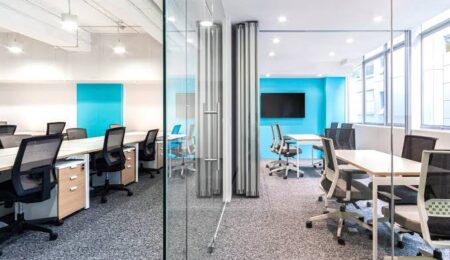
- Unmatched Design: Even in 2026, WeWork’s aesthetic remains the industry benchmark. The “Grade A” buildings, natural lighting, and ergonomic common areas are superior to most local competitors like Awfis or IndiQube.
- The “All Access” Advantage: Their digital product, WeWork All Access, is highly rated for hybrid teams. It allows employees to work from any WeWork in Mumbai, Bengaluru, or even globally, which is a major draw for remote-first companies.
- Networking Ecosystem: They maintain a high Net Promoter Score (NPS) of ~74, largely due to their community events and the “WeWork Labs” program, which still provides genuine value for networking with VCs and other founders.
- Enterprise Reliability: They have successfully moved from “small desks” to “managed floors” for giants like Amazon, JP Morgan, and Deutsche Telekom, ensuring high-spec IT security and infrastructure.
The Cons (The “WeWork Tax”)
- Premium Pricing: You pay a “brand tax.” A dedicated desk in a prime Mumbai location like BKC can cost ₹30,000–₹60,000 per month, significantly higher than boutique coworking spaces.
- Densification: Recent reviews suggest that to achieve profitability, some centers have become “crowded.” Common areas can feel more like a busy café than a quiet office during peak hours (11 AM – 4 PM).
- Booking Friction: Popular meeting rooms in high-demand hubs (like Galaxy in Bengaluru or Enam Sambhav in Mumbai) often require booking days in advance.
3. Mumbai-Specific Performance
In Mumbai, WeWork dominates the “Premium” segment.
- Prime Locations: Their presence in BKC (Enam Sambhav) and Worli is unmatched for prestige.
- Connectivity: Most Mumbai locations (Andheri, Vikhroli, Malad) are strategically placed near Metro stations or the Eastern/Western Express Highways, specifically targeting the “commute-heavy” professional.
| Product Type | Estimated Monthly Cost (Mumbai) | Best For |
| On-Demand (Day Pass) | ₹500 – ₹800 | Freelancers / Travelers |
| Hot Desk | ₹12,000 – ₹18,000 | Individual professionals |
| Dedicated Desk | ₹22,000 – ₹35,000 | Small startups (2-5 people) |
| Private Office | ₹40,000+ per desk | Established SME / Corporate teams |
Final Sentiment
Rating: 4.2 / 5
Who should use it? If your business prioritizes brand image, talent retention, and global mobility, WeWork India is the best in the market. Its 2026 status as a profitable, public-listed company has removed the “instability” fears that once plagued the brand.
Who should skip it? Bootstrap startups or highly cost-conscious businesses. You can find “plug-and-play” offices in Mumbai for 40% less if you are willing to sacrifice the premium “vibe” and global network.


Leave a Comment