
Awfis Pros & Cons Review
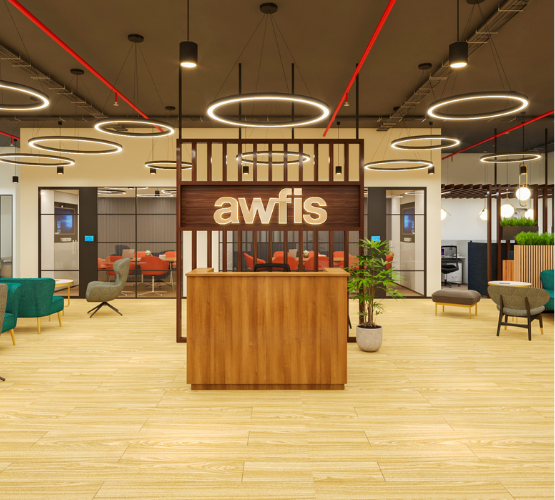
Awfis (Awfis Space Solutions Limited) is a dominant leader in India’s flexible workspace market. Listed on the NSE and BSE, it stands out as the country’s most geographically diverse operator, running 266+ centers across 18 major cities with over 184,000 seats.
Unlike competitors that only cater to mega-corporations (like Smartworks or Table Space) or focus purely on boutique hot-desking, Awfis uses a hybrid ecosystem model. They provide a spectrum of options—from day-pass hot desks and shared coworking cabins to fully customized, enterprise-grade managed offices (Awfis Gold, Elite, and Awfis Transform).
The Pros: Why Businesses Choose Awfis
1. Market-Leading Cost Efficiency & Highly Competitive Pricing
Compared to international operators like WeWork India or premium niche builders like Table Space, Awfis is highly cost-effective. While a premium enterprise seat at WeWork might average ₹12,000 to ₹16,000+ per month, standard Awfis spaces offer highly competitive entry points starting around ₹6,500 per month. This makes it incredibly efficient for mid-market companies and cost-conscious corporate teams to achieve a professional presence.
2. Unrivaled Tier-2 City Reach
Awfis has effectively cornered the “reverse migration” and distributed talent trends in India. While most large competitors limit themselves strictly to the top 6 or 8 metro regions, Awfis operates across 18 cities. This deep footprint includes high-growth Tier-2 tech and business hubs like Chandigarh, Indore, Jaipur, Kochi, Lucknow, and Bhubaneswar—allowing companies to recruit or position satellite teams closer to their regional bases.
3. Capital-Light “Managed Aggregation” Model
Unlike traditional coworking companies that sign expensive, rigid property leases (which exposes them to high financial risk if tenants leave), Awfis uses a capital-efficient Managed Aggregation (MA) model. They partner directly with building landlords via profit-sharing or joint venture agreements.
Why this matters for tenants: Because Awfis doesn’t carry massive fixed lease overheads, they boast a rock-solid balance sheet with an industry-leading 60%+ Return on Capital Employed (ROCE). This financial health guarantees operational stability—there is virtually zero risk of the facility suddenly shutting down due to operator insolvency.
4. Modular Flexibility (From 1 to 1,000+ Seats)
Awfis accommodates structural changes better than almost anyone else. A growing company can start with 5 dedicated desks in a shared zone, scale to a private 50-seat cabin as they hire, and eventually transition into a completely partitioned, brand-customized Awfis Transform managed floor plate within the exact same building.
The Cons: The Hidden Trade-offs & Limitations
1. Variable Aesthetic and Building Tiers
Because Awfis partners with localized property owners across 18 different cities, the baseline building quality can fluctuate. While their Gold 2.0 and Elite centers feature next-generation, premium, and WELL-certified infrastructure, some of their older or more budget-friendly centers may feature narrower floor plans, more basic interior finishes, or simpler building entry gates compared to the grand, ultra-luxurious mega-campuses built by operators like Smartworks.
2. Higher Foot Traffic and Density in Common Areas
Because Awfis provides highly accessible pricing and caters to a massive, diverse user base (3,500+ clients ranging from solo freelancers and small startups to tech giants), the public amenities can get crowded. Shared conference spaces, meeting pods, cafeteria zones, and main printer stations can see significant foot traffic and wait times during peak business hours.
3. Standard Layout Separation vs. Absolute Isolation
While Awfis provides excellent partitioned privacy for their enterprise clients, their multi-format approach means your team will still walk through shared corridors, lift lobbies, and security check gates shared with individual coworking members or smaller agile teams. If your corporation demands an absolute “siloed” facility—where outside personnel are physically blocked from even seeing your office footprint—a dedicated enterprise-only workspace provider would fit better.
Strategic Comparison Framework
| Feature | Awfis | Smartworks | WeWork India |
| Primary Specialty | Hybrid Flex Ecosystem (Co-working to Custom Managed Office) | Mega-Campus Layouts (Entire corporate lifestyle buildings) | Premium Metro Address (Focus on high brand prestige) |
| Geographic Depth | 18 Cities (Deep Tier-1 and Tier-2 market penetration) | 15 Cities + Singapore footprint | 8 Major Metros |
| Pricing Bracket | Highly Economical / Value-focused | Mid-to-High Premium | Premium Top-Tier |
| Capital Efficiency | High (Managed Aggregation model, net cash positive) | Stable (Campus leasing infrastructure) | Traditional Lease & Operate |
Awfis Last Five Year Growth
Over the past five years, Awfis Space Solutions Limited has undergone a massive structural and financial evolution. It transitioned from a venture-backed, startup-centric coworking model into a highly profitable, public enterprise, officially listing on the NSE and BSE via a massive IPO.
By leveraging its distinct Managed Aggregation (MA) asset-light architecture, Awfis successfully expanded its footprint, turning the post-pandemic distributed workforce and the ongoing Global Capability Center (GCC) boom into hyper-growth drivers.
1. Geometric Scaling: Footprint & Seat Expansion
Awfis deliberately focused on achieving widespread geographic coverage across tier-1 and tier-2 micro-markets rather than restricting itself to a few hyper-dense tech corridors.
- Portfolio Growth: The company rapidly expanded its footprint from under 3.5 million square feet to a massive operational network spanning 266 centers across 18 major cities.
- Seat Count Inflection: Awfis successfully scaled its capacity to approximately 184,000 active operational seats. In the fiscal year alone, the company added 41 new centers and 30,000 seats to its portfolio, solidifying its status as India’s most geographically diversified flexible workspace provider.
- Granular Penetration: Awfis successfully capitalized on corporate “reverse migration,” aggressively opening high-yielding centers in prominent tier-2 markets like Chandigarh, Jaipur, Indore, Lucknow, Kochi, and Bhubaneswar.
2. Financial Performance: The Transition into a Profit Engine
Financially, the last five years reflect a business that successfully unlocked immense operating leverage. Historically reporting net accounting losses while aggressively investing capital into scaling up its network, Awfis has shifted firmly into the black.
- Explosive Top-Line Revenue: Total consolidated income experienced an exceptional 49% annual growth rate over a multi-year horizon, scaling from just ₹216 crore to a record-breaking ₹1,586.12 crore. This represents a sharp 25.8% jump from the ₹1,260.74 crore reported in the prior fiscal cycle.
- Surging Net Profitability (PAT): Net profit expanded securely to ₹70.85 crore, driven heavily by an explosive fourth quarter where profits more than doubled (jumping 107% year-on-year to ₹23.24 crore).
- Expanding Margin Structure: Operating EBITDA climbed to ₹550 crore, with operating EBITDA margins expanding dynamically to 36.8%. This operational surge was fueled by a greater concentration of mature, fully occupied centers scaling up their billings.
- Debt Optimization: Following its blockbuster public listing, Awfis successfully cleaned up its capital framework, driving its net debt-to-equity ratio down to a highly favorable -0.20x, ensuring an incredibly stable, net-cash-positive balance sheet.
3. The Structural Growth Drivers
Awfis’s dramatic performance metrics over this five-year window are anchored in two core strategic pivots:
The Managed Aggregation (MA) Blueprint
Instead of locking themselves into traditional, high-risk fixed rent leases with macro property developers, Awfis routed over 62% of its signed supply through profit-sharing joint ventures with landlords. This capital-light aggregation shielded the company from fixed real estate overheads during market downturns while driving its annualized Return on Capital Employed (ROCE) to an industry-leading 66%.
The Institutional Shift & The GCC Boom
While initially localized around freelancers and early-stage agile startups, Awfis deliberately shifted its targeting to highly sticky enterprise corporate clients.
- Around 48% of the company’s total client base is now comprised of multi-center corporate users who lease spaces across several cities simultaneously.
- Furthermore, massive dedicated Global Capability Centers (GCCs) became the fastest-growing revenue vertical, now contributing 23% of Awfis’s total rental revenue.
The Road Ahead
With institutional and developer partnerships now accounting for nearly 60% of all newly signed space supply, Awfis’s management has outlined a highly aggressive forward pipeline, guiding for a 25% to 27% consolidated revenue increase alongside an additional gross target expansion of 22,000 to 25,000 seats annually to preserve its market-leading network footprint.
The Verdict
Awfis is an exceptional match for agile enterprises, mid-market businesses, and rapidly growing Global Capability Centers (GCCs) that value geographic reach, flexibility, and prudent capital allocation. It excels at letting companies test new cities or establish cost-effective regional offices without signing long-term liabilities.
However, if your operational strategy demands a massive lifestyle campus with private fitness rooms and childcare, requires absolute architectural isolation from external startups, or prioritizes global brand prestige over localized regional reach, opting for premium, enterprise-exclusive campus networks is the logical alternative.

Lindsey Tarry is a passionate real estate blogger, journalist, and content creator dedicated to breaking down the complexities of the property market. From deep-dive market trends and breaking industry news to practical advice for buyers and sellers, Lindsey crafts engaging stories and articles that keep readers informed and ahead of the curve. When she isn’t writing, she is keeping a close eye on the latest architectural and market shifts.

Leave a Comment