
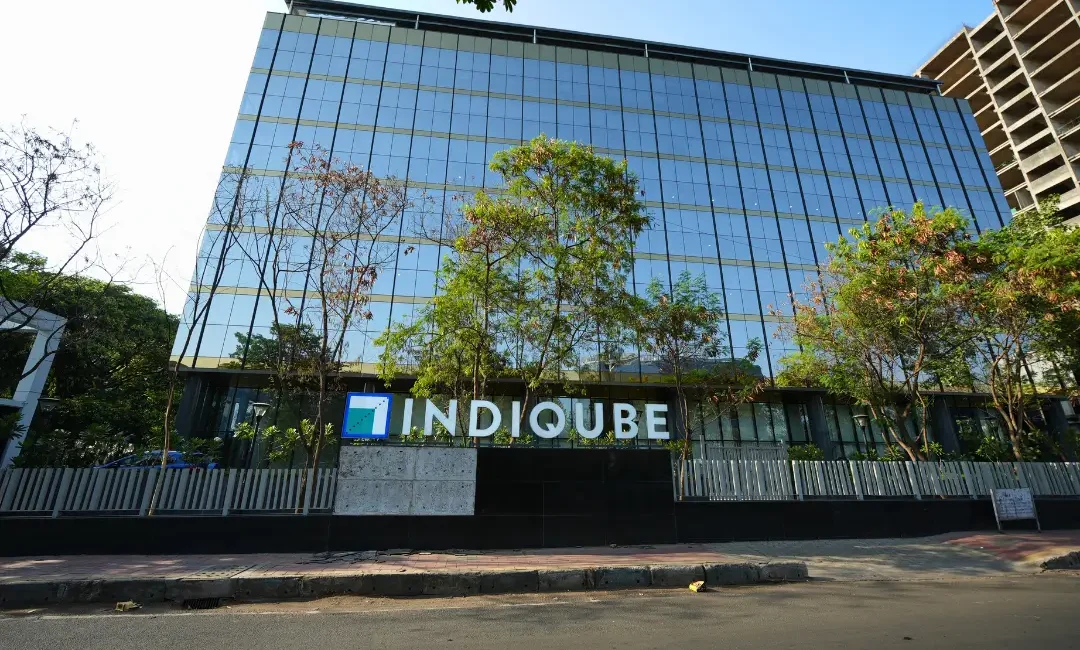
IndiQube Pros & Cons Review

IndiQube is a dominant force in India’s commercial real estate sector, specializing in tech-enabled, flexible managed office spaces. Publicly listed on the Indian stock exchanges, the company operates a hybrid portfolio that bridges the gap between co-working flexibility and rigid enterprise leasing.
With over 9.5 million square feet under management spanning 130+ centers across 17 cities, IndiQube stands out for its unique “Hub & Spoke” approach, targeting fast-scaling startups, Global Capability Centers (GCCs), and mid-market enterprises.
The Pros: Why Businesses Choose IndiQube
1. Superior “Hub & Spoke” Flexibility
Unlike competitors that only cater to massive multi-floor requirements, IndiQube excels at micro-zoning. If an enterprise wants a massive corporate headquarters (Hub) in a tier-1 city center and multiple small satellite offices (Spokes) scattered across residential suburbs or tier-2 cities for remote tech teams, IndiQube can execute this under a unified contract framework.
2. High Customization and Granular Layout Choices
Through its DesignQube™ ecosystem, the company allows for deep structural interior flexibility. Businesses are not stuck with pre-configured templates. Tenants can choose from multiple product tiers:
- IndiQube Grow™: Scalable, flexible workspace plans for agile teams and rapid extensions.
- Custom Enterprise Built-to-Suit: Walled-off, highly customized dedicated office layouts engineered precisely around a company’s specific workflow.
3. Comprehensive, Tech-Driven Facility Management
IndiQube operates as a complete business ecosystem via its proprietary MiQube application suite. Instead of just renting desks, the platform completely digitizes daily facility management operations. Employees use the app for:
- Contactless building access control and visitor logging.
- Booking internal or network-wide smart meeting rooms on demand.
- Accessing IndiQare™—an a-la-carte concierge system offering transport booking, office item procurement, employee health programs, and catering management.
4. Direct Commitments to Sustainability
For modern corporations seeking strict ESG compliance, IndiQube stands head and shoulders above many local alternatives. The operator maintains over 29 green-certified centers and runs a dedicated 20 MW group solar farm in Karnataka, which cleanly offsets energy grid costs and reduces the operational carbon footprint for its massive client facilities.
The Cons: Hidden Trade-offs & Operational Limitations
1. Significant Geographic Concentration Risk
While IndiQube has successfully expanded its presence into 17 cities—including growing tier-2 markets like Bhubaneswar, Jaipur, and Mohali—roughly 80% of its core portfolio remains concentrated in South India (predominantly Bengaluru, Chennai, and Hyderabad). If your enterprise needs extensive, multi-building large-scale expansions across North or West India, their premium options are considerably thinner compared to competitors like Smartworks or Table Space.
2. Complex Accounting Frameworks (Ind AS Impact)
As a publicly traded stock, IndiQube’s dual accounting disclosures can confuse enterprise finance teams evaluating long-term lease liabilities. While highly profitable under localized cash flows (IGAAP models), the company periodically reports bottom-line net accounting losses under modern Ind AS lease rules due to the aggressive front-loading of long-term depreciation and borrowing charges on their properties.
3. Higher Density Potential in Communal Layouts
Because IndiQube actively accommodates multiple tiers of users—from individual solopreneurs and early startups to massive GCC entities within the same macro buildings—common asset spaces (like entry reception bays, main parking ramps, and primary cafeteria courts) can experience high density and physical crowding during peak office morning and evening shifts.
4. Slower Move-In Timelines for Complex Tailoring
While standard co-working desks are plug-and-play, their deeply customized enterprise designs require precise architectural alignment. If a corporate tenant demands heavy infrastructure changes, complex isolated networks, or dedicated data center rooms, turnaround times can stretch longer than the hyper-standardized turnkeys offered by campus-focused operators.
Strategic Fit Comparison
| Operational Metric | IndiQube | Table Space | Smartworks |
| Primary Structural Model | Hybrid Scalable Layouts (Mix of private zones, startups, & GCCs) | Bespoke Enterprise WaaS (Ultra-private standalone floor layouts) | Large Campus Ecosystem (Full-scale lifestyle mega-buildings) |
| Geographic Footprint | Massive South India depth; wide tier-2 coverage (17 cities) | Pan-India tier-1 tech hubs focus | Pan-India tier-1 focus + Singapore footprint |
| Proprietary Software | Deep (MiQube App for localized employee workflow) | Medium (Focus on enterprise data security perimeters) | Deep (SmartVantage building automation infrastructure) |
| Sustainability (ESG) | High (Active 20 MW Solar Farm & green-certified spaces) | Varies by base landlord asset | Standard institutional campus parameters |
IndiQube Last Five Year Growth
Driven by the rapid rise of Global Capability Centers (GCCs) and a post-pandemic shift toward asset-light corporate models, IndiQube has grown aggressively over the last five years.
A major milestone in this growth journey occurred when the company officially transitioned to a publicly traded entity, listing on the NSE and BSE.
1. Portfolio Expansion & Footprint Growth
IndiQube’s physical expansion relies on a strategic “Hub & Spoke” layout model, allowing them to balance large enterprise centers with agile suburban satellite spaces.
- The Footprint Scale: The company’s live portfolio climbed from roughly 4.5 million square feet to 9.66 million square feet of leasable area, nearly doubling its real estate presence.
- Seat Capacity Expansion: As of their latest fiscal reporting, IndiQube operates a capacity of 215,000 seats across more than 130 centers.
- Geographical Spread: The company expanded its presence beyond core southern tech hubs into 17 Indian cities, actively establishing footprints in high-growth tier-2 cities like Bhubaneswar, Jaipur, and Mohali to support distributed tech teams.
2. Financial Metrics & Revenue Scaling
IndiQube’s physical scaling has driven explosive growth in top-line revenue, shifting their operations into a high-yield enterprise bracket.
- Record-Breaking Revenue: Annual revenue skyrocketed to ₹1,469 crore—a massive 37% year-on-year increase driven by aggressive corporate leasing traction.
- Profitability and Cash Flows: Operational discipline resulted in a 145% surge in Profit After Tax (PAT), reaching ₹125 crore, while operating cash flows grew 147% to ₹304 crore.
- EBITDA & Margin Expansion: Earnings Before Interest, Taxes, Depreciation, and Amortization (EBITDA) crossed the ₹300 crore mark with margins expanding to 21%, up from 18% in the prior fiscal period.
- Balance Sheet Health: Following its public listing, IndiQube significantly optimized its capital structure, dramatically improving its debt-to-equity ratio from a heavily leveraged 0.9 down to a clean 0.08.
3. The Core Drivers of Growth
- The GCC Ecosystem: Global Capability Centers have become IndiQube’s stickiest revenue driver. Massive multi-year deals—such as a recent ₹75 crore workspace agreement with a healthcare tech GCC and a ₹52 crore deal with a Japanese e-commerce giant—have secured predictable long-term occupancy.
- Steady-State Occupancy: Across its entire live portfolio, the brand maintains a healthy 88% steady-state occupancy rate, insulating it from the high churn rates common in standard hot-desking spaces.
- Pivoting IPO Capital for Scale: The company raised ₹604.4 crore through its public offering. The board strategically reallocated unspent IPO proceeds directly toward financing upfront security deposits, interior fit-outs, and new corporate centers to maintain an annual growth target of adding 1.5 to 2 million square feet.
- ESG Integration as a Growth Catalyst: Recognizing that multinational corporations require strict sustainability compliance, IndiQube invested in a dedicated 20 MW group solar farm in Karnataka alongside rooftop solar units across 22 centers. This green infrastructure heavily reduced operational electricity overheads for incoming tenants, creating a strong differentiator over traditional commercial landlords.
The Verdict
IndiQube is an exceptional match for fast-growing businesses, tech firms, and enterprises utilizing a distributed hybrid workforce model. It provides the perfect middle ground: offering premium, enterprise-grade infrastructure while retaining the localized agility needed to open smaller branch offices across diverse Indian cities.
However, if your corporation requires absolute layout isolation (a facility completely free from outside startup or co-working visibility), demands immediate grand-scale campus expansions outside of South India, or wants an asset entirely managed away from multi-tenant shared infrastructure, choosing dedicated, enterprise-only managed workspace providers may align better with your real estate strategy.

Lindsey Tarry is a passionate real estate blogger, journalist, and content creator dedicated to breaking down the complexities of the property market. From deep-dive market trends and breaking industry news to practical advice for buyers and sellers, Lindsey crafts engaging stories and articles that keep readers informed and ahead of the curve. When she isn’t writing, she is keeping a close eye on the latest architectural and market shifts.

Leave a Comment