The “GCC-Ready” Checklist: 2026 Developer & Operator Guide
Transforming Assets for the $100 Billion Capability Hub
By 2026, Global Capability Centers (GCCs) have evolved from back-office support to high-value Centers of Excellence (CoE). With nearly 2,500 GCCs projected to operate in India by 2030, the competition among builders to attract these Fortune 500 giants is fierce.+1
A GCC doesn’t just lease space; they lease a secure, scalable, and compliant ecosystem. For an operator like Redbrick to influence top builders, the property must pass the “GCC-Ready” audit.
1. The Physical & Infrastructure Foundation
GCCs in 2026 are moving toward “AI-First” operations. This requires infrastructure that exceeds standard Grade A specifications.
- Power Density: Capability centers running AI/ML workloads require 2x the standard power density. Redbrick-ready buildings must provide high-tension power feeds and 100% N+1 redundancy.
- Floor Plate Efficiency: GCCs prefer large, contiguous floor plates (>30,000 sq. ft.) to facilitate cross-functional collaboration.
- High-Speed Connectivity: Tier-1 carrier-neutral fiber paths with at least three diverse entry points to the building to ensure zero downtime.
- Built-to-Spec Labs: The ability to incorporate specialized R&D or hardware testing labs within the managed office framework.
2. Institutional-Grade Security Protocols
Because GCCs handle global IP and sensitive customer data, “standard” security is insufficient.
The Security Audit Checklist:
- [ ] Zone-Based Access: Multi-layered biometric access (Face-recognition/Palm-vein) for separate functional zones (e.g., HR vs. R&D).
- [ ] Information Security (InfoSec): Firewalled IT rooms with dedicated cooling and 24/7 CCTV monitoring of server racks.
- [ ] SOC-2 & ISO Compliance: The building and the operator must align with ISO 27001 (Information Security) and ISO 22301 (Business Continuity).
- [ ] Physical Hardening: Specialized fire suppression systems (FM-200) for server rooms and high-security turnstiles at all entry points.
3. The ESG & Compliance Mandate
Global headquarters are now legally bound to report on the sustainability of their offshore units.
- Real-time ESG Reporting: Builders must provide the operator with real-time data on energy and water consumption. Managed offices like Redbrick then pass this data to the GCC for their global disclosures.
- Certifications: Minimum LEED Platinum or IGBC Super-Platinum rating.
- Wellness Standards: Compliance with the WELL Building Standard, focusing on Indoor Air Quality (IAQ) where $CO_2$ levels are kept below 800 ppm.
- Inclusive Design: 100% adherence to the Rights of Persons with Disabilities Act and gender-neutral infrastructure.
4. The “Offitel” Experience (Office + Hotel)
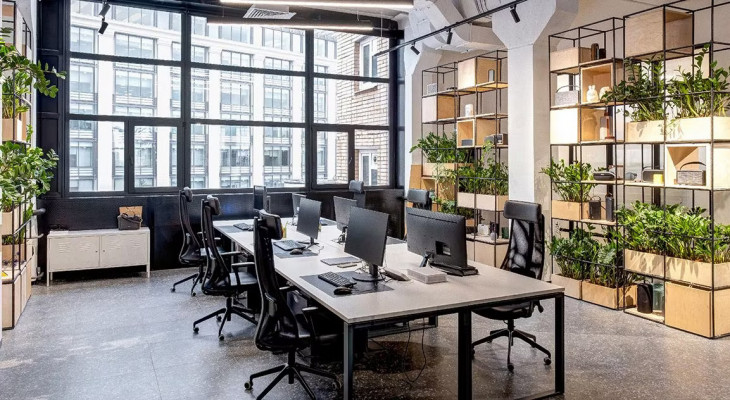
In 2026, the office is a recruitment tool. GCCs prioritize spaces that offer a high-end “hospitality” feel to reduce talent attrition.
| Feature | GCC Standard | Impact |
| Amenity Ratio | 15% of total area | Higher employee engagement |
| Concierge Services | 24/7 helpdesk & travel desk | Seamless executive experience |
| Biophilic Zones | Indoor gardens & oxygen rooms | 15% increase in productivity |
| Smart Tech | AI-driven desk & room booking | Optimized space utilization |
5. Governance & Legal Readiness
The “Managed GCC” model requires a sophisticated legal framework that builders and operators must have ready.
- White-Label Branding: The ability for the GCC to have its own branding/signage while using the operator’s management services.
- SM REIT Readiness: Documentation that allows the asset to be easily rolled into a Small and Medium REIT in the future.
- Operational Transparency: Monthly audit reports on facility management, security drills, and statutory compliance (PF, ESI, Labor laws).


Leave a Comment