
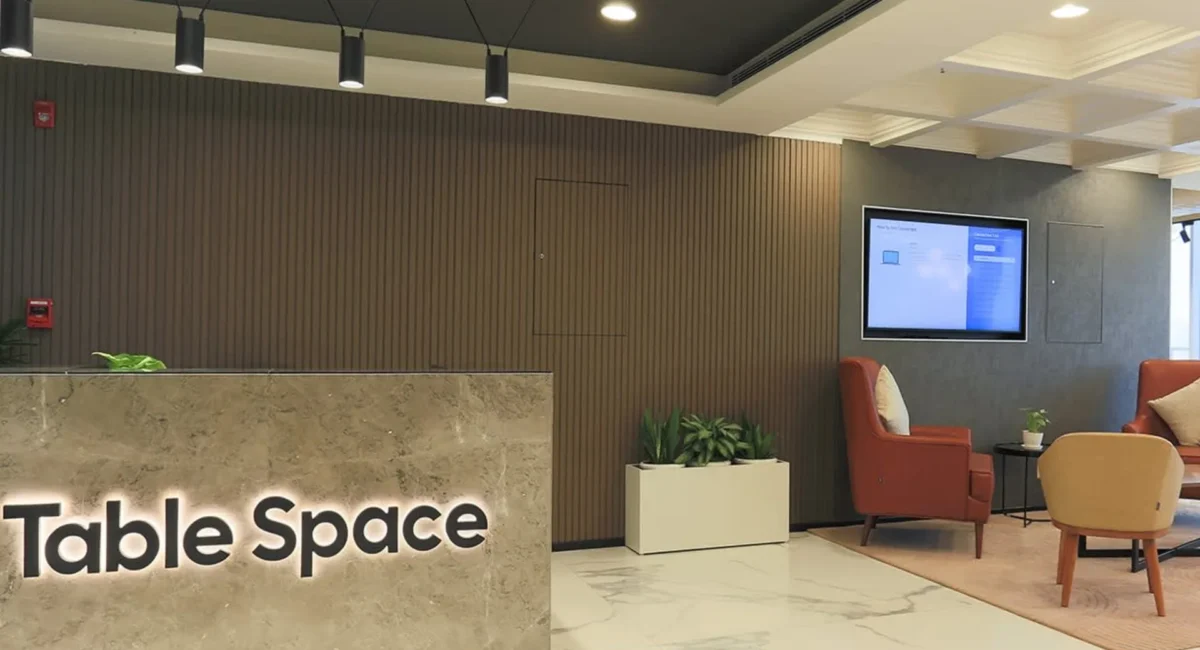
Table Space Reviews
In the Indian professional landscape, Table Space is recognized as the “Enterprise Specialist” in the Workspace-as-a-Service (WaaS) sector. Unlike many coworking players that emphasize social networking or community events, Table Space focuses on high-performance, custom-built environments for Global Capability Centers (GCCs) and Fortune 500 companies.
Managing over 9.9 million square feet across cities like Bengaluru, Mumbai, and Hyderabad, Table Space has a reputation for operational rigor and speed.
1. The “Liquid Real Estate” Model
The defining feature of Table Space is its ability to turn rigid commercial real estate into “Liquid Real Estate.”
- Asset-Light Transition: They specialize in taking a company from a high-Capex (Capital Expenditure) traditional lease to a zero-Capex managed model.
- Speed to Market: A recurring highlight in reviews is their 90-day delivery promise. They can design, build, and operationalize a shell space into a fully functional, branded office in roughly three months.
- Scale and Customization: They do not offer “one-size-fits-all” offices. Instead, they build bespoke suites that mirror a company’s global brand guidelines, ensuring the space feels like a private headquarters rather than a shared facility.
2. Infrastructure & Technology
Table Space differentiates itself through proprietary technology platforms that manage the “health” of the office.
| Technology | Functionality |
| TS Design Studio | An automated floor-plan platform that uses 2,500+ design principles to optimize layouts for efficiency and safety. |
| Project Delivery Platform | Provides clients with real-time tracking (including photos) of their office build-out progress. |
| Office Health Engine | Tracks asset performance and preventive maintenance to ensure utilities and IT infrastructure never fail. |
| Employee App | Features facial recognition for security, concierge services, and a digital help desk. |
3. Client Profile & Market Position
Table Space is not designed for solo freelancers or small startups. Their portfolio is dominated by massive global entities such as Google, Microsoft, AMD, Salesforce, and Shell.
- Regional Dominance: They have a heavy presence in premium business districts like BKC (Mumbai), Outer Ring Road (Bengaluru), and Hitech City (Hyderabad).
- Occupancy & Retention: They maintain an occupancy rate between 88% and 90%, backed by long-term institutional leases that typically last 3 to 5 years.
4. Pros and Cons: A Strategic View
The Upside
- Unmatched Compliance: They are frequently cited as the only operator fully compliant with global standards like GDPR (data protection), ASHRAE (air quality), and NBCI (fire safety).
- Branding Autonomy: Unlike coworking hubs where the operator’s brand is everywhere, Table Space allows the client’s brand to be front and center.
- Predictable “Single-Cheque” Pricing: Maintenance, utilities, security, and cleaning are bundled into one monthly fee, making financial planning simple for CFOs.
The Downside
- Privacy Over Community: If your goal is to network with other companies or attend social mixers, Table Space might feel “too corporate.” There is very little inter-company interaction compared to hubs like 91springboard.
- Service Consistency: While the infrastructure is top-tier, some reviews of specific older centers mention occasional friction with administrative responsiveness or internet reliability during peak transitions.
- Minimum Scale: They generally prefer large-scale requirements (often 100+ seats), making them inaccessible for small teams or boutique agencies.
Final Verdict
Table Space is the premier choice for Global Capability Centers (GCCs) and large MNCs that require extreme security, rapid deployment, and Grade-A infrastructure. It is less of a “coworking space” and more of a “real estate partner” that removes the administrative burden of running a massive office.


Leave a Comment