
ESG-Compliant Managed Office Benchmarks: The 2026 Standard
Transforming Commercial Assets from Square Footage to High-Yield Ecosystems
As of 2026, Environmental, Social, and Governance (ESG) compliance in India has shifted from a “moral elective” to a financial mandatory. For developers and managed office operators like Redbrick, ESG is now the primary lever for increasing Property Yield and ensuring REIT-readiness.
In this report, we break down the definitive 2026 benchmarks for managed office spaces across India’s top 7 cities.
1. The Environmental (E) Benchmarks: Net-Zero & Decarbonization
The “E” in ESG is no longer just about LED lights. In 2026, the focus has moved to Embodied Carbon and Real-Time Efficiency.
Key Metrics & 2026 Standards:
- Energy Intensity: Grade A managed offices are now benchmarked at <100 kWh/sqm/year.
- Renewable Energy Mix: Top-tier operators are achieving a 40-60% renewable energy blend via off-site Power Purchase Agreements (PPAs) or on-site solar installations.
- Scope 1, 2, & 3 Disclosures: Under the updated GRESB 2026 Standard, emissions from landlord-controlled tenant spaces have been reclassified from Scope 3 to Scope 1 and 2, placing the responsibility for decarbonization squarely on the operator and builder.
- Water Positive Operations: A minimum of 35% water recycling through decentralized STP (Sewage Treatment Plants) is now the industry baseline.
2. The Social (S) Benchmarks: Wellness & Inclusion
In 2026, the office is a tool for Talent Retention. The “Social” component focuses on how the space impacts the human beings within it.+1
Key Metrics & 2026 Standards:
- Air Quality (IAQ): Real-time monitoring of $PM_{2.5}$, $CO_2$, and TVOCs. Benchmarks require $CO_2$ levels to remain below 800 ppm even at peak occupancy.
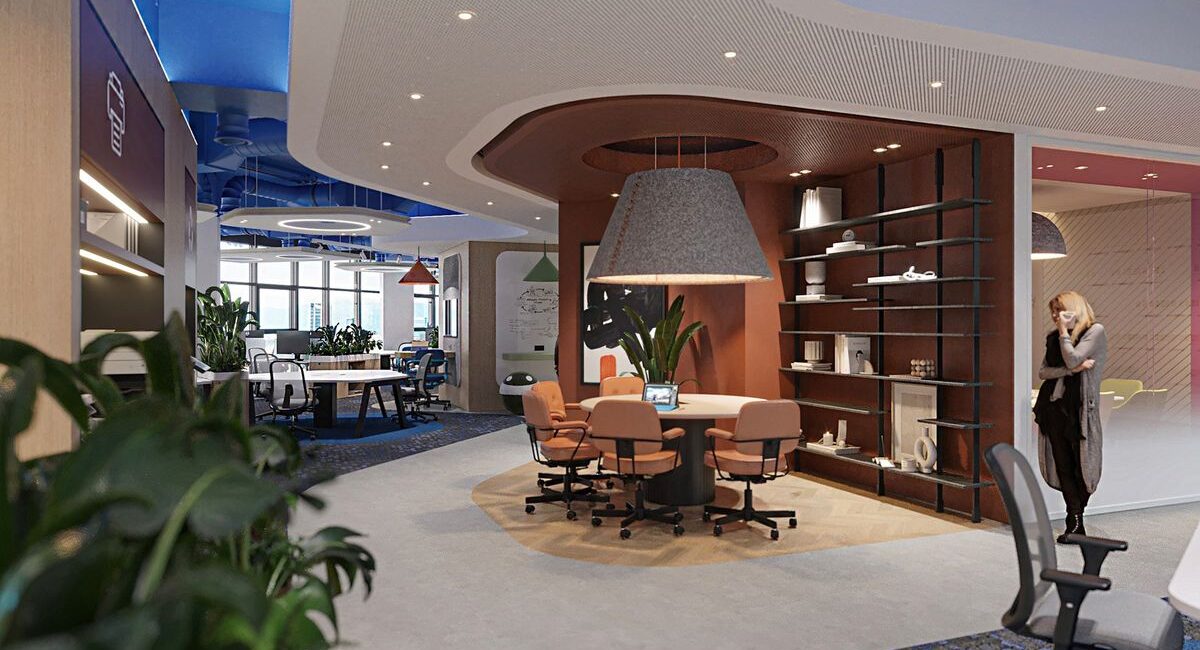
- Biophilic Integration: A minimum of 10-15% of floor area dedicated to green zones, indoor plants, or natural light access (Daylight Autonomy).
- Diversity & Accessibility: 100% compliance with the Rights of Persons with Disabilities Act. New 2026 benchmarks also include scored recognition for gender-neutral facilities and “Human Capital” scores within management teams.
3. The Governance (G) Benchmarks: Transparency & Ethics
Governance is the “hidden engine” that institutional investors use to value an asset. It ensures that the “E” and “S” are not just greenwashing.
Key Metrics & 2026 Standards:
- BRSR Core Alignment: SEBI’s Business Responsibility and Sustainability Reporting (BRSR) is now mandatory for the top 1,000 listed entities. Managed office operators must provide audit-ready data to their corporate tenants to fulfill these requirements.
- Green Lease Clauses: 2026 contracts now feature Data-Sharing & Metering clauses. These legally bind the tenant and operator to share energy data to meet collective sustainability targets.
- Supply Chain Due Diligence: Operators are now audited on the ESG scores of their vendors (housekeeping, security, fit-out contractors).
4. The Financial Impact: The “Green Premium” vs. “Brown Discount”
In 2026, the correlation between ESG compliance and financial performance is undeniable.
| Metric | ESG-Compliant (Grade A+) | Non-Compliant (Legacy) |
| Rental Premium | +7% to +12% | Baseline |
| Occupancy Rate | 92% – 95% | 75% – 80% |
| Operational Costs | -20% (Efficiency gains) | Rising (Carbon taxes/inefficiency) |
| Cap Rate (Exit Value) | Lower (More valuable) | Higher (Higher risk) |
“Buildings that fail to meet 2026 ESG benchmarks are facing a ‘Brown Discount,’ where vacancy rates are 1.5x higher than their sustainable counterparts.” — Institutional Investment Summary Q4 2025
5. Summary: The 2026 ESG Checklist for Builders
To influence institutional capital, builders should ensure their managed office partners (like Redbrick) hit these four markers:
- Certification: LEED Platinum or IGBC Super-Platinum status.
- Digitization: IoT-enabled energy and water tracking (Real-time).
- Wellness: WELL Building Standard v2 alignment.
- Reporting: Automated BRSR-compliant reporting for enterprise clients.

Leave a Comment