
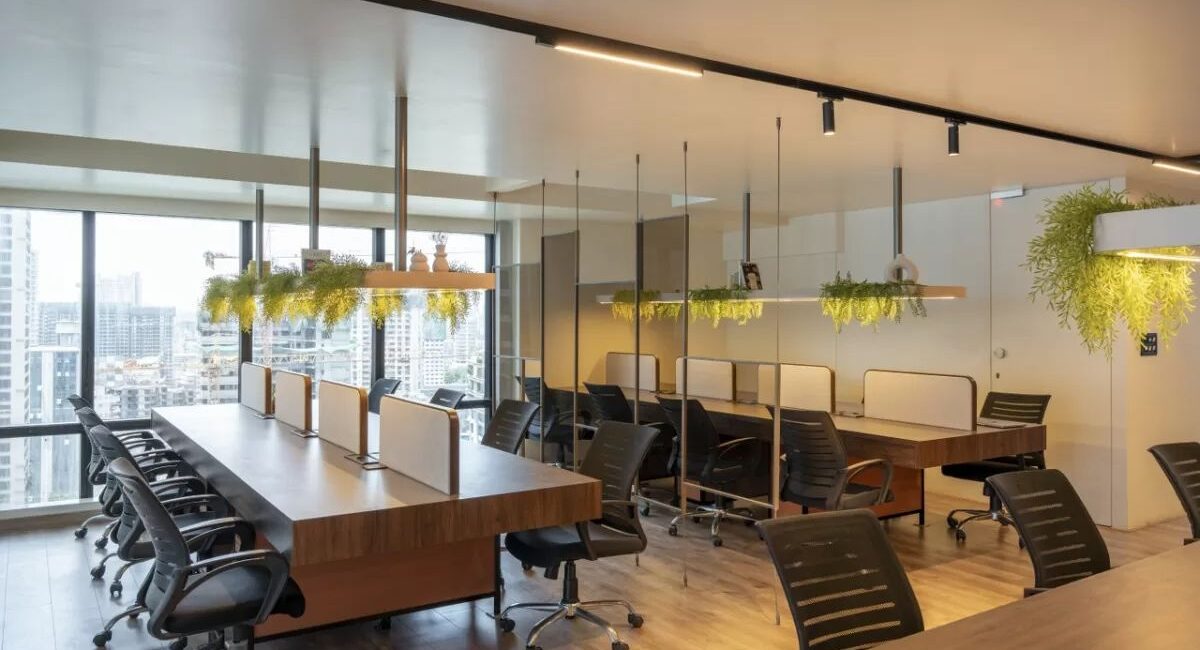
JLL Mumbai Office Market Report 2026: Record Leasing and the Flex Revolution
The Mumbai office market has entered 2026 on the back of a historic performance, defying global economic headwinds to record its strongest leasing volumes in over a decade. According to the latest JLL India data, Mumbai has solidified its position as a primary hub for both domestic BFSI giants and a rapidly expanding cohort of Global Capability Centers (GCCs).
For builders and institutional investors, the 2026 landscape is no longer about just providing “space”—it is about high-yield, managed ecosystems that cater to a “flight-to-quality” trend.
1. Key Statistics: Mumbai’s Unprecedented Peak
The full-year data for 2025 and projections for 2026 reveal a market characterized by high absorption and tightening supply in core districts.
- Gross Leasing Volume (GLV): Mumbai recorded a robust 11.6 million sq. ft. of gross leasing in 2025, a significant 13% year-on-year increase.
- Vacancy Compression: City-wide vacancy has plummeted to approximately 10%, with prime Grade A assets in core micro-markets reporting single-digit availability—the lowest in over 15 years.
- Rental Appreciation: Driven by the scarcity of premium stock, average rents in Mumbai grew by 4.5% y-o-y, with SBD BKC and SBD North experiencing the sharpest quarterly gains.
2. The Rise of “Flex” and Managed Offices
One of the most critical shifts highlighted by JLL is the dominance of flexible workspace operators.
“Flex was the leading occupier segment for the second quarter in a row, with its share in Q4 2025 leasing hitting an unprecedented 26.6%.” — JLL Research
For developers, this marks a transition in the tenant profile. Managed office providers like Redbrick Offices are now the “anchor tenants” of 2026, acting as a bridge between the builder’s inventory and the sophisticated needs of Fortune 500 companies.
3. Micro-market Watch: Where the Demand is Moving
The completion of major infrastructure projects has reshaped Mumbai’s commercial geography:
- BKC & SBD Central: Remains the “gold standard” with ultra-low vacancy. The operationalization of Metro Line 3 (BKC to Worli) has further boosted demand here.
- Navi Mumbai: Emerged as a powerhouse, accounting for 52% of net absorption in recent quarters. It is now the preferred destination for large-scale back-office consolidations and data centers.
- Thane & Western Suburbs: Continued to see high traction from domestic firms and Indian “indigenous flex” operators due to improved connectivity from the Coastal Road and Metro expansions.
4. The GCC Factor: India as the “Office to the World”
Global Capability Centers (GCCs) contributed to nearly 38% of total leasing across India in 2025. In Mumbai, these centers are increasingly moving beyond just IT/ITeS into high-end financial research, legal services, and engineering R&D.
Builders who partner with managed office operators are finding it easier to attract these GCCs, who prefer Capex-light models where the operator handles the fit-outs, ESG compliance, and daily facility management.
5. Strategic Takeaway for Developers
JLL’s report underscores that the “Warm Shell” model is losing its edge. In 2026, the highest yields are being captured by:
- Green-Certified Buildings: Over 80% of new commercial space is now ESG-compliant; non-certified buildings are facing “brown discounts.”
- Service-Oriented Partnerships: Developers are moving toward revenue-share models with managed office operators to capture the premium rents paid by enterprise clients for “Office-as-a-Service.”


Leave a Comment